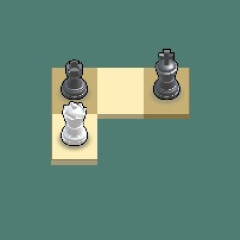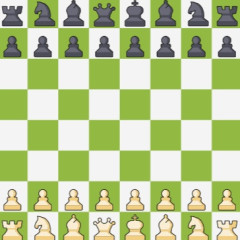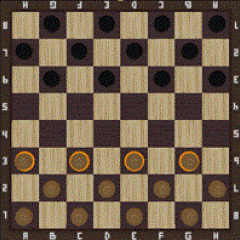
Welcome to Chess Master 3D, a unique 3D chess game. You must think strategically and improve your skills to conquer every challenging and stressful game.
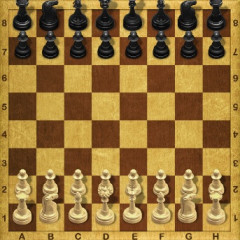
Chess Master 3D is appealing primarily because of its realistic 3D graphics, recreating a vibrant chessboard. The smooth movement of the pieces and flexible camera angles allow for a clearer and more intuitive view of the game compared to traditional 2D chessboards. Your task is to control your pieces accurately and strategically to defeat your dangerous opponents.
In addition, the game boasts an intelligent AI system across multiple difficulty levels. From beginners to experienced players, everyone can find a suitable opponent. Another major advantage is the variety of game modes. Players can practice solo, play against the computer, or challenge themselves through pre-designed chess levels.
To play successfully requires using logical thinking skills and analyzing your opponent's moves to quickly attack and defend at the right time.
Due to the fast drag-and-drop operation, you are likely to move pieces reflexively without analyzing the consequences. A wrong move can lead to losing a piece or being checkmated early.
Not occupying the central squares e4, d4, e5, and d5 leaves the pieces vulnerable and makes it difficult to develop a strategic position later on.